Content Pillars: The Ultimate Blueprint for Consistent Posting

If you’ve ever stared at a blank screen wondering what to post today, you don’t have a creativity problem. You have a structure problem.
Content pillars fix that. They’re the foundation behind every consistent, recognizable brand you follow on social media — and once you build yours, planning content becomes dramatically easier.
Watch: 1-Minute 47-Second Summary of Content Pillars Video
Want the fast version first? This video breaks down how "content buckets" prevent fatigue, keep your messaging focused, and make your audience engagement predictable.
What Are Content Pillars?
Content pillars (sometimes called content categories or content buckets) are the core subjects your brand consistently talks about. They define what you’re about, signal your expertise to your audience, and give every piece of content a clear purpose.
Think of them as your lanes. Instead of posting whatever feels relevant on a given day, you stay in your lanes — and your audience always knows what they’re getting from you.
Good content pillars are specific to your business, relevant to your audience, and narrow enough to keep you focused without being so narrow you run dry.
Why Content Pillars Matter
The benefits go beyond just having a plan. Content pillars solve several problems that trip up most creators at once.
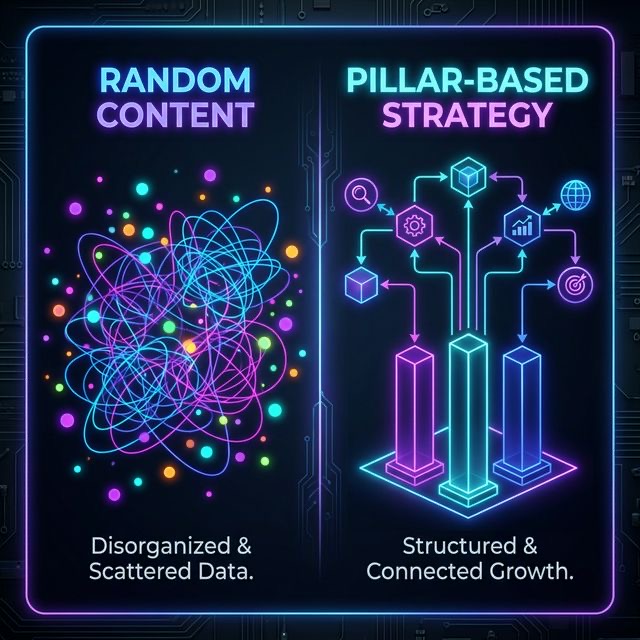
They prevent content fatigue. When you’re pulling from multiple defined subjects, your feed stays fresh. You’re not recycling the same angle over and over — you’re rotating through different sides of what you do.
They keep you focused. Without pillars, it’s easy to drift. You start posting about things that feel vaguely relevant but don’t actually serve your audience or business. Pillars keep you on topic and on brand.
They set audience expectations. When people follow you and immediately understand what you’re about, they’re more likely to stick around. Pillars make your brand readable — someone can scroll your feed for 30 seconds and know exactly what you offer.
They make idea generation almost automatic. Once your pillars are defined, generating ideas becomes a matter of filling in the blanks rather than starting from scratch every time.
How to Find Your Content Pillars
Start broad, then narrow down. Here’s a simple process:
Step 1: Map Out Your Business
List everything you offer, every topic you’re knowledgeable about, and every problem you help your audience solve. Don’t filter yet — just get it all out.
Step 2: Think About Your Audience
Who are you talking to? What do they care about? What keeps them up at night? Your pillars should sit at the intersection of what you know and what they actually want to hear. Content that doesn’t connect with your specific audience doesn’t belong in your pillars, even if it’s interesting to you.

Step 3: Group and Prioritize
Look at your list and find the natural clusters. A personal trainer, for example, might land on pillars like exercise, nutrition, motivation, mental health, and weight loss strategy. Each one is distinct, ties directly to their offering, and speaks to something their audience genuinely cares about.
Step 4: Check Your Data
If you’ve been posting for a while, let your analytics guide you. Which topics consistently get the most engagement? Which fall flat? Ask your audience directly through polls or questions in your stories. The answers will either confirm your instincts or reveal something you hadn’t considered.
How Many Pillars Do You Need?
Around 6 is a solid target for most creators — enough variety to keep things interesting, focused enough to stay coherent. If you’re running a tight niche, 3 to 5 works well. If your business covers more ground and you post frequently, you might go up to 9 or 12. The right number depends on your business, not a formula.
How to Put Your Pillars to Work
Having pillars defined is only useful if you actually use them. Here’s how to turn them into a real content system:
Brainstorm in Batches
Sit down with each pillar and generate 10 to 15 post ideas for each. You’re not committing to all of them — you’re building a pool to pull from. When Monday rolls around and you need something to post, you’re choosing from a list, not creating from nothing.
Assign Pillars to Days
If you post five times a week, give each day a dedicated pillar. Monday might be motivation, Tuesday exercise, Thursday nutrition, and so on. This rhythm helps your audience anticipate your content and helps you batch-create posts efficiently.
Build a Content Calendar
Take your brainstormed ideas and slot them into your schedule. A simple spreadsheet or a dedicated tool works fine. The goal is to look two to four weeks ahead at any given time, so you’re never scrambling the night before.

Keep It Alive
Set a recurring time — weekly or monthly — to add fresh ideas to your pillar lists. Industries shift, audience interests evolve, and your own thinking gets sharper over time. Your pillars should evolve too.
The Difference It Makes
Most creators who struggle with consistency aren’t lazy or uncreative — they just don’t have a system. Content pillars give you that system. They turn the open-ended question of what to post into a structured, repeatable process.
Ready to start building your content strategy? Try Content Extractor →