Why 'Just Blog More' Is Bad Advice

If you’ve been creating content for a while, you’ve probably heard some version of the same advice: just keep publishing. Blog consistently. Post every week. More content means more traffic. More traffic means more growth.
It sounds logical. It’s also mostly wrong.
The “just blog more” strategy fails most content creators not because they’re producing bad content — but because blogging more doesn’t automatically translate into leads, subscribers, or sales. And that’s a problem worth understanding before you write another post.
The Uncomfortable Truth About Blog Traffic
Here’s a stat that should make every content creator stop and think: visitors who land on a sales or service page first are 50 times more likely to convert into a lead than visitors who arrive through a blog post.
Read that again. Fifty times.
Blog posts are incredibly valuable — but not for the reason most creators think. They don’t reliably turn readers into customers, clients, or subscribers in one step. What they actually do well is attract backlinks, build domain authority, and pull in informational traffic. That’s useful, but it’s only part of the equation.
The mistake most content creators make is treating their blog as the whole strategy when it’s really just one piece of a much bigger picture.
The Real Job of Your Content
Think of your content ecosystem in two layers:
- Transactional pages (your service, product, or offering pages) are where conversions actually happen. These are the pages people land on when they’re ready to act. They should be built to rank in search and be optimized to convert — with clear answers to objections, social proof, testimonials, and a specific call to action.
- Informational content (your blog posts, guides, research) exists to build authority, attract links, and bring in people who are still in the research phase. Their job is to make your transactional pages more powerful — not to convert on their own.
When you understand this distinction, the whole strategy shifts. Instead of asking “what should I blog about next?”, you start asking “what content will build enough authority to get my core pages ranking — and converting?”
What Actually Moves the Needle

The content creators who break through don’t just publish more. They publish smarter, with a clear purpose behind each piece. Here are the moves that separate effective content strategies from ineffective ones:
1. Publish Original Research
Original research is one of the most powerful content formats available, and one of the most underused. Only about 25% of bloggers ever publish it — but those who do report results far disproportionate to the effort involved.
Why does it work so well? Because original data gives other writers, journalists, and creators something to cite. When your research becomes a primary source, backlinks come naturally. And those backlinks flow authority to your entire site — including your most important pages.
You don’t need a massive budget or a research team. A survey of 50 people in your niche, an analysis of publicly available data, or an aggregation of existing stats into a new framework can all qualify as original research. The key is finding the “missing statistic” — the number or insight your industry keeps referencing but no one has actually documented yet.
2. Create Content for People Already Considering You
Most content creators focus entirely on top-of-funnel content — posts that attract strangers. But there’s a high-value, low-competition opportunity hiding in plain sight: content written for people who are already interested.
Think about the questions your potential audience asks before they commit. What objections come up? What comparisons do they want to see? What do they need to understand before they trust you enough to subscribe, buy, or hire?
Writing detailed, honest content that answers these questions — and making it easy for people to find and share — turns your blog into a tool that actively supports conversion, not just discovery.
3. Collaborate With Others in Your Space
One of the fastest ways to build authority is to borrow some credibility from people who already have it. Contributor quotes, expert roundups, and interviews with respected voices in your niche do two things: they improve your content, and they give those contributors a reason to share and link back to you.
Guest posting on established sites works the same way — you get in front of a new audience and earn a backlink that strengthens your own domain authority. Only about 60% of bloggers ever write a guest post. That means showing up in someone else’s corner of the internet is already a differentiator.
4. Repurpose What’s Already Working
If you’ve written a post that performs well, don’t just leave it as text. Turn it into an infographic. Record a short video walking through the key points. Pull it apart and use the insights in your newsletter. Package the whole thing as a downloadable guide.
Content repurposing isn’t laziness — it’s leverage. Different formats reach different people, and a single strong idea can generate far more reach and links when it exists in multiple places.
The Framework Behind Effective Content
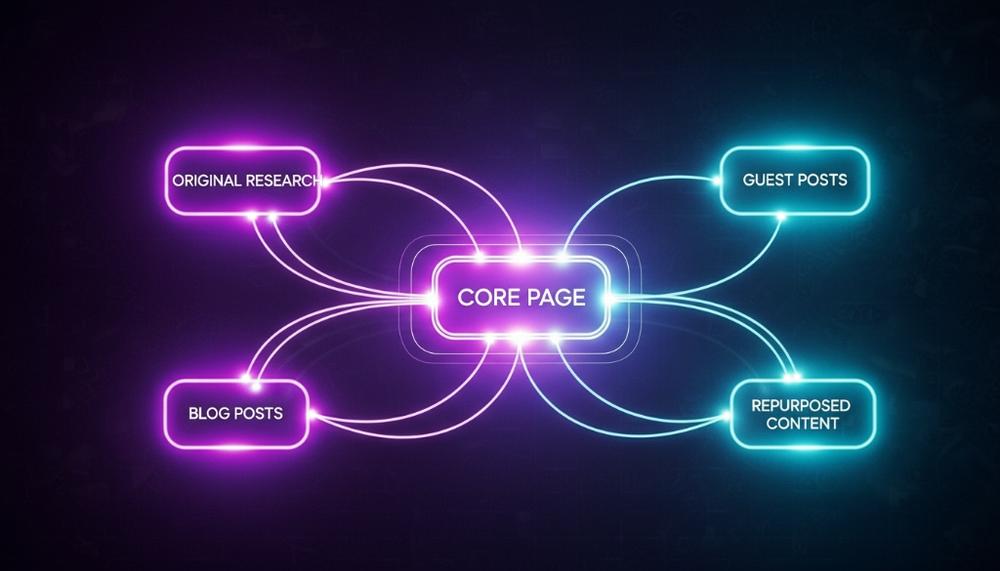
Here’s how these pieces fit together in practice. Start with your core page — the page that matters most for your goals, whether that’s a services page, a product page, or a landing page. That’s the destination everything else points toward.
Then build outward: original research that earns links and shares, blog posts that answer specific questions and build topical authority, guest posts and collaborations that bring external links back to your site, and repurposed content that extends the reach of your best ideas.
Every piece of content has a job. The blog posts earn links. The links build authority. The authority lifts your core page in search rankings. The core page converts the visitors who matter most.
That’s the actual mechanic. Blogging more, without this structure in place, just means spinning your wheels faster.
A Quick Reality Check
Only 39% of content creators have a documented content strategy. Those who do are twice as likely to report success. That gap — between creating content and creating content with a plan — is where most of the opportunity lives.
The good news? Most of your competitors are still following the “just blog more” playbook. That means the bar for doing something more intentional isn’t as high as it might seem.
You don’t need to produce more. You need to produce with more purpose.
The Bottom Line
Blogging isn’t dead. Content marketing isn’t a waste of time. But treating your blog as a standalone growth strategy — disconnected from a broader authority-building plan — is why so many content creators work hard and see mediocre results.
The shift is simple to describe, even if it takes effort to execute: stop asking how to get more content out, and start asking how each piece of content earns something — a link, a share, a higher-ranking page, a conversion. When every piece has a clear job, the whole thing starts to work.
That’s not a content strategy. That’s a content system. And there’s a big difference.
Need a system to generate strategic content ideas? Check out the Content Ideas Vault →