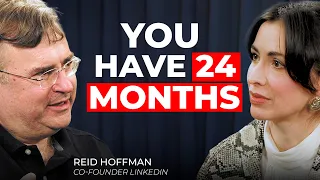
AI Economics Content Ideas for Technology

AI's Societal Impact: Economic Models & Wealth Distribution

The rapid advancement of AI necessitates new economic models to address societal adaptation. Potential scenarios include universal access to AI boosting productivity or value accruing to AI owners, requiring new distribution mechanisms. Concepts like Universal Basic Income and Universal Basic Wealth are discussed, with a speculative model proposing global distribution of AI capacity via 'tokens'.

Key Insights from AI Economics Content

1

Universal Basic Wealth aims to provide individuals with an ownership share in AI creations and their compounding value, fostering participation beyond just monetary distribution.

2

A speculative 'token' model proposes distributing 8 quintillion AI-generated tokens equally among 8 billion people, granting each individual 1 trillion tokens as 'universal basic wealth'.

3

The desire for 'agency and co-creation' suggests that simply receiving dividends from AI may not be fulfilling; humans may need to lead in inventing new culture and creative endeavors.

4

Distributing AI capacity globally via tokens could allow human ingenuity and creativity to drive economic activity, giving every person a 'slice of the world's AI capacity'.

Suggestions for topic AI Economics

Ready-to-use angles — mapped to each distribution channel, with a draft preview.

Actionable

8-tweet thread walking through the core AI economics models — universal access, value-accrual to owners, UBI, Universal Basic Wealth, and the token distribution concept — one model per tweet. Lead with the most counterintuitive claim (that getting a dividend from AI might not be enough if you feel disconnected from the process). End with a poll asking which model followers think is most likely by 2035. Curiosity-gap hook drives retweets from economics and tech audiences.

Most people debating AI's economic impact are missing the real question. It's not who gets the money — it's who gets agency:
Most people debating AI's economic impact are missing the real question. It's not who gets the money — it's who gets agency: 1/ Everyone is asking: "Will AI take jobs?" That's the wrong question. The real question is: when AI generates most of the world's economic value, who has a meaningful say in what happens next? 2/ Model 1: Universal Access. GPT-7 (or equivalent) is free for everyone. Productivity booms. Individual earning potential rises. Sounds good — but the value from the *biggest* discoveries still flows to whoever owns the infrastructure. You get the tool. They get the patent. 3/ Model 2: Value Accrual to Owners. AI discovers a new energy source. New cancer cure. The breakthrough is real — but the economic value lands almost entirely with the company that owns the AI. Everyone else gets cheaper energy eventually. No stake in the discovery itself. 4/ Model 3: Universal Basic Income. Regular cash payments to everyone, unconditionally. Better than nothing. But critics identify a critical flaw: UBI gives you money. It doesn't give you participation. You're receiving from the system, not contributing to it. 5/ Model 4: Universal Basic Wealth. Instead of cash, you receive an ownership share in the AI creations and their compounding value. Not a dividend — a stake. The distinction matters enormously. Dividends are passive. Ownership is participatory. 6/ Model 5: Token Distribution. Here's the "crazy idea" that deserves serious consideration. If the world generates 8 quintillion AI tokens per year, distribute a portion equally: 8 billion people × 1 trillion tokens each. Sell yours, pool them, or build with them. 7/ The pattern: every model that distributes cash alone fails the agency test. Every model that distributes ownership or capacity preserves it. That's the real variable the debate keeps missing. 8/ Which of these 5 models do you think is most likely by 2035? And which one would you actually want? Those two answers might be different — and that gap tells you a lot. Reply or retweet with your take.
LinkedInActionable

800-word article framed as a thought experiment: "If AI generates 8 quintillion tokens per year and every person on Earth received 1 trillion of them, what would you do with yours?" Use the Universal Basic Wealth concept to explore what participation in an AI economy actually means versus passive dividend receipt. Open with the token math as the hook. Invite readers to comment on what they would use their AI capacity share for. Targets futurists, economists, and executive leaders thinking about organizational roles in an AI-driven economy.

If every person on Earth received 1 trillion AI-generated tokens as their share of the world's AI capacity — what would you do with yours:
If every person on Earth received 1 trillion AI-generated tokens as their share of the world's AI capacity — what would you do with yours? The scenario sounds like a thought experiment. It might be the most important economic policy question of the next decade. Here's the math that makes it real. AI systems are already generating vast quantities of output — text, code, analysis, creative work, scientific reasoning. As compute scales, that output compounds. The speculative figure on the table: 8 quintillion AI-generated tokens per year, divided equally across 8 billion people. That's 1 trillion tokens per person — your universal share of the world's AI capacity. Now the question changes from "what is Universal Basic Wealth?" to "what would you actually do with yours?" Three paths emerge. You could sell them. If AI compute capacity becomes a tradable commodity — and there are early markets suggesting it already is — your trillion tokens have market value. You convert them to cash, the same way you would convert any asset. This is the path that most closely resembles UBI, except that you've chosen the conversion rather than receiving it passively. You retain the agency of the decision. You could pool them. This is where it gets interesting. Groups of people combining their token allocations could fund projects that no individual allocation could sustain: original research initiatives, documentary films, community infrastructure modeling, open-source AI tools built for specific industries. Your trillion tokens, pooled with a thousand others, becomes real productive capacity. You're not a recipient. You're a stakeholder in something being built. You could build with them directly. If you have a project — a problem you understand, a domain where you already have expertise — your token allocation is startup capital in a form that didn't exist before. Not money to hire people. Compute capacity to test, iterate, and build at a speed that previously required institutional resources. The UBI debate has always stalled on the question of dependency: does receiving cash make people passive participants in an economy rather than active contributors? Universal Basic Wealth, in the token model, sidesteps that question entirely. The tokens are capacity, not cash. What you do with them is up to you. That's why the framing matters. "How would you distribute AI's economic benefits?" lands very differently than "What would you build with your share of the world's AI capacity?" The first question is about redistribution. The second is about participation. What would you do with your trillion tokens? I'm genuinely curious — comment below.
InstagramActionable

7-slide carousel titled "5 Ways the AI Economy Could Work — and Who Wins in Each." Slide 1 is the hook (the token math stat). Slides 2-6 cover each economic model — universal access, owner accrual, UBI, Universal Basic Wealth, token distribution. Slide 7 is the CTA: save this and share your take in comments. Hook strategy: lead with a specific number that forces people to stop scrolling. Engagement mechanic: ask followers to tag someone building in AI to get their reaction.

8 quintillion AI tokens per year. 8 billion people. Here's what happens if we split them equally — and why it changes everything:
Slide 1: 8 quintillion AI tokens per year. 8 billion people. Here's what happens if we split them equally — and why it changes everything. Slide 2: First: what's a token? Every word AI generates costs compute. Tokens are the unit of that compute. The world is about to generate more of them than any economy in history. Slide 3: Model 1: Universal Access GPT-7 is free for everyone. Productivity surges. But the value from AI's biggest discoveries still flows to infrastructure owners. You get the tool. They get the stake. Slide 4: Model 2: Universal Basic Income Regular cash payments for everyone. Better than nothing — but you're receiving from the system, not shaping it. Agency is missing. Slide 5: Model 3: Universal Basic Wealth You don't receive cash. You receive an ownership share in what AI creates. Compounding value. Participation, not dependency. Slide 6: The "crazy idea": Token Distribution 8 quintillion tokens ÷ 8 billion people = 1 trillion tokens per person. Sell them. Pool them for a project. Build with them directly. Your choice. That's the point. Slide 7: The real question isn't who gets the money. It's who gets agency. Which model are you betting on? Save this and share your take in comments.
YouTube ShortsActionable

55-second explainer titled "UBI vs. Universal Basic Wealth — What's the Difference and Why It Matters." Opens by posing the scenario: AI discovers a new energy source — who should profit? Explains that UBI gives you money while Universal Basic Wealth gives you ownership and compounding value. Closes with the token model as the most concrete example and asks viewers to comment on which model they prefer. Platform logic: economic concept videos with a strong opening dilemma perform well in Shorts because the question drives comment engagement.

AI is about to generate more value than any economy in history. The question nobody is asking: who actually owns a piece of it...
AI is about to generate more value than any economy in history. The question nobody is asking: who actually owns a piece of it. [visual cue: open on GDP comparison graphic — AI projected output vs. historical economies] We talk constantly about AI productivity, AI job disruption, AI timelines. [visual cue: cut to text: "But not this question"] But almost nobody is asking the ownership question. [visual cue: creator holds up two hands — "Option A" and "Option B"] If AI discovers a new energy source tomorrow, there are two very different worlds. In World A, the value flows to the company that owns the AI system. In World B, there's a mechanism for distributing a portion of that value to everyone. [visual cue: cut to text: "UBI vs Universal Basic Wealth"] Universal Basic Income says: give everyone cash. Critics say that creates passive dependency — you receive from the system, but you don't shape it. [visual cue: scales graphic — one side "cash," other side "ownership"] Universal Basic Wealth says: give everyone an ownership share in what AI creates. The value compounds. You're a stakeholder, not a recipient. [visual cue: creator back on camera] And then there's the token model — the "crazy idea" that might be the most concrete proposal yet. 8 quintillion AI tokens per year, divided equally across 8 billion people. One trillion tokens per person. Yours to sell, pool, or build with. [visual cue: text overlay — "Who owns the future?"] The infrastructure is being built right now. The ownership question is still open. That window won't stay open long. Who do you think should own a piece of AI's output? Comment below.
TikTokActionable

45-second video using a "what if" format to make the token distribution model viscerally real. Open with: "What if you woke up tomorrow with 1 trillion AI tokens in your account?" Walk through three things you could do — sell them, pool them for a creative project, or use them to build a business. Engagement mechanic: ask viewers to comment what they'd build. Platform logic: aspirational "what if" scenarios with specific numbers generate high comment volumes on TikTok from younger audiences interested in the future of work and wealth.

You just received 1 trillion AI tokens. Here are the 3 things you could do with them — and one changes everything...
You just received 1 trillion AI tokens. Here are the 3 things you could do with them — and one changes everything. [TEXT OVERLAY: "What if this showed up in your account tomorrow?"] [ACTION: creator looks at phone screen — notification sound effect] Notification: "Your AI token allocation has been deposited. Balance: 1,000,000,000,000 tokens." [TEXT OVERLAY: "1 TRILLION tokens"] [ACTION: zoom into phone screen] That's the "crazy idea" being floated in AI economics circles right now. 8 quintillion AI tokens generated per year. Divided by 8 billion people. One trillion per person. [TEXT OVERLAY: "Here's what you could do"] [ACTION: creator holds up one finger] Option 1: Sell them. AI compute is already trading in early markets. Your trillion tokens have cash value. You convert, pocket the money. It's UBI but you chose the conversion. The agency is yours. [TEXT OVERLAY: "Option 2: Pool them"] [ACTION: two fingers] Option 2: Pool them. Find a thousand people who want to fund the same thing — a research project, a documentary, a tool for your community. Your trillion combined with theirs becomes real productive capacity. You're not a recipient. You're a co-founder of something. [TEXT OVERLAY: "Option 3: Build with them"] [ACTION: three fingers — pause] Option 3: Build with them directly. You have a problem you understand. A domain where you already have expertise. Use your token allocation to test, iterate, and build at a speed that used to require institutional resources. This one changes everything — because now the startup capital isn't money. It's compute. [TEXT OVERLAY: "The real question: what would YOU build?"] [ACTION: point at camera] Which option would you choose? Comment below — I'm reading all of them.
edit
NewsletterActionable

650-word newsletter piece framed as "The AI Economy Briefing: 5 Models for How Wealth Gets Distributed When AI Does the Work." Open with the agency and co-creation insight — that simply receiving a dividend may not be fulfilling if people feel disconnected from the process. Walk through each model with one paragraph each. End with a reader question: which model are you betting on, and how are you positioning yourself now? Engagement mechanic: reply CTA to drive direct responses and segment reader intent.

The AI wealth distribution debate is missing the most important variable: agency. Here are 5 economic models and what each one means for your future:
The AI wealth distribution debate is missing the most important variable: agency. Here are 5 economic models and what each one means for your future. ## The Question Nobody Is Asking Clearly Enough Every major AI company is now generating economic output at a scale that didn't exist five years ago. The question of how that value gets distributed is no longer theoretical — it's a live policy debate, a boardroom strategy question, and a personal financial planning variable all at once. Most of the debate centers on "who gets the money." That framing misses the more important question: who gets to participate in shaping what comes next? Here are the five models currently on the table, and what each one actually means if you're not a founder or an infrastructure owner. ## Model 1: Universal Access to Advanced AI The most optimistic scenario: a GPT-7 equivalent becomes freely available to everyone. Productivity booms. Individual earning potential rises dramatically for anyone who can leverage the tool. The case for this model is strong — widespread access creates widespread capability uplift. The limitation: the value from AI's most significant discoveries — new energy sources, new therapeutics, new materials — flows primarily to the companies that own the AI infrastructure. You get the tool. They keep the stake in what the tool discovers. **What it means for you:** Your earning power could increase substantially. Your share of AI's most valuable output remains near zero. ## Model 2: Value Accrual to Infrastructure Owners The default trajectory without policy intervention. AI makes world-changing discoveries. The economic value of those discoveries — the patents, the licensing, the monopoly pricing — concentrates among the relatively small group of companies that own the compute and the models. Everyone else benefits indirectly, eventually. Cheaper energy. Better drugs at lower cost over time. But the primary wealth effect stays at the top of the stack. **What it means for you:** You're a consumer of AI output, not a stakeholder in it. The gap between AI infrastructure owners and everyone else widens faster than any previous technological transition. ## Model 3: Universal Basic Income The most politically visible response. Regular, unconditional cash payments to every citizen, funded partly from AI productivity gains or direct taxation of AI companies. Several countries have run pilots. The economic research on UBI is more positive than the political discourse suggests. The persistent critique: UBI addresses income but not agency. Receiving a check from the AI economy is not the same as participating in it. People who feel economically dependent — even comfortably so — report lower well-being than people who feel like contributors. **What it means for you:** More financial security. No more meaningful stake in the AI economy's direction. ## Model 4: Universal Basic Wealth The upgrade to UBI that most economists haven't fully modeled yet. Instead of distributing cash, distribute an ownership share in the AI systems and their compounding value. Not a dividend — a stake. The distinction is critical: ownership compounds over time and gives the holder a voice in governance decisions. Dividends don't. The implementation challenge is real: what exactly do you own, and how is that ownership structured? But the principle is clear — if AI generates the wealth, participants should own a slice of the generator, not just receive its exhaust. **What it means for you:** Your wealth could compound alongside AI's economic output rather than falling further behind it. ## Model 5: Token Distribution The most concrete — and most speculative — proposal. If AI systems generate approximately 8 quintillion tokens per year (a number tied to current compute scaling trajectories), distribute a portion directly to every person on Earth. 8 billion people, 1 trillion tokens each. Yours to sell on open markets, pool for collaborative projects, or use directly to build. This model preserves the agency that UBI loses. You're not receiving cash — you're receiving capacity. What you do with it is your decision. Sell it, pool it, or use it to build something that would have required a startup's infrastructure budget three years ago. **What it means for you:** The most participatory model on the table. Also the one furthest from current policy reality. ## The Variable That Decides Everything Every model that distributes cash alone fails the agency test. Every model that distributes ownership or productive capacity preserves it. The AI wealth distribution debate will continue for years. But the individuals who position themselves now — as builders, as domain experts amplified by AI, as public contributors to the intersection of AI and specific industries — are capturing value regardless of which model wins. Agency is the variable. What are you building yours into? **Reply and tell me:** Which of these five models do you think is most likely? And which would you actually want for yourself and your family? Those two answers are often very different — and that gap is worth sitting with.

Technology & AI Economics: Common Questions

Answers to the most common questions about creating Technology content around AI Economics topics.

The economic structures that will determine who benefits from AI are still being actively debated and designed — this is one of the most open windows in modern economic history. Universal Basic Wealth proponents argue that the key is gaining an ownership share in AI creations now, before value accrual consolidates to a small group of infrastructure owners. The token distribution model suggests that if AI capacity can be distributed globally, each person on Earth could effectively receive a "slice" of the world's AI output. The individuals best positioned are those who combine AI capability with the ability to participate in building new culture, creative work, and economic activity — not just passive recipients of AI output.
Universal Basic Income provides a regular cash payment unconditionally, but critics argue it may not give recipients meaningful agency or a sense of participation in the economy that produced that cash. Universal Basic Wealth goes further by proposing that individuals receive an ownership share in AI creations and their compounding value — not just money, but a stake in what generates the money. The token distribution model operationalizes this: rather than a cash transfer, each person would receive 1 trillion AI-generated tokens representing their share of global AI output capacity. Those tokens could be sold, pooled for collaborative projects, or used directly — preserving agency rather than creating passive dependency.
Under current ownership structures, the primary value from AI discoveries accrues to the owners of AI systems — not users. This is exactly the problem that Universal Basic Wealth and token distribution models are designed to address. The speculative token model proposes distributing a portion of AI-generated output directly to individuals globally, bypassing the need to own infrastructure. Even without policy intervention, individuals can participate through building applications on top of AI systems, contributing to open-source AI projects, or developing domain expertise that AI cannot replicate — all of which capture value without requiring ownership of the underlying compute.
The most actionable path is using AI to accelerate productivity in an area where you already have domain credibility, rather than competing in the crowded field of generic AI content creation. The agency and co-creation framework suggests that humans who lead in inventing new culture and creative endeavors — using AI as an amplifier rather than a replacement — will capture disproportionate value. Concretely: AI-assisted research, writing, design, and analysis can be productized into subscription services, consulting, or content businesses that command premium rates because the output reflects genuine expertise. The economic models suggest that value will concentrate at the intersection of AI capability and human judgment, not in undifferentiated AI output.
The central tension is between two scenarios: one where universal access to advanced AI (like GPT-7 or equivalent) boosts individual productivity broadly, and another where value from AI discoveries concentrates in the hands of infrastructure owners. The token model proposes a third path — distributing AI output capacity directly to individuals globally — but this requires coordinated policy action that does not yet exist. For individuals, the practical implication is that building skills that leverage AI rather than compete with it is the near-term hedge. The desire for agency and co-creation rather than passive dividends suggests that participation — building, creating, and contributing — is more economically durable than waiting for redistribution.
Traditional equity ownership in AI companies is concentrated among founders, early investors, and employees — accessible only to those already inside the system. Universal Basic Wealth proposes a structural alternative where every individual receives an ownership share in AI creations and their compounding value, regardless of prior wealth or access. The token distribution model makes this concrete: 8 quintillion AI-generated tokens divided equally among 8 billion people gives each person 1 trillion tokens — a form of participation that does not require buying in at market prices. The critical distinction is that Universal Basic Wealth aims to give people a stake in the future value generated by AI, not just a share of current profits.
The most accessible entry point is understanding the distinction between AI as a tool you use versus AI as a system that generates value you can share in. The agency and co-creation principle suggests that humans who contribute to culture, creativity, and collaborative projects in an AI-enabled world are better positioned than passive observers. Practically, this means experimenting with AI tools in your existing domain, documenting what you learn publicly, and building small projects that demonstrate the intersection of your expertise and AI capability. The token distribution concept, while speculative, illustrates that economic participation in AI does not require technical depth — it requires engagement with how value is created and distributed.
Results depend heavily on specificity and positioning rather than volume of output. The AI economy models consistently show that value concentrates at the intersection of AI capability and unique human contribution — domain expertise, cultural insight, creative judgment. Individuals who build in public around a specific application of AI to a real problem tend to attract audiences, clients, and opportunities faster than those producing generic AI content. Within 12 months of consistent, specific work, it is realistic to build a small but highly engaged audience, land consulting or advisory engagements, or launch a productized service. The agency and co-creation framework suggests that the ceiling is not determined by AI capability but by the uniqueness of what you bring to the collaboration.
rocket_launch

Turn Any Technology URL into Content

Paste any AI Economics article, video, or podcast into PullContent and get platform-ready drafts, key insights, and content angles in seconds.

add_link Start Mining Your Next Viral Post